


“As a baby learns to walk, it keeps falling down. Is this failure?” Chan Master Sheng Yen asks in a teaching featured in the book Faith in Mind: A Guide to Ch’an Practice. Failure is a necessary part of life and practice, he says.
We should not fear failure, but somewhere along the way, getting back up after falling might not come so easy. We might dread falling so much that we never take a step. Or, if we do stumble, the self-reproach might outweigh the actual event.
As complex and deeply-rooted as a fear of failure may be, Buddhist wisdom offers many ways to loosen its hold. Among them is acceptance, or the commitment to stop resisting and start welcoming every action, result, and circumstance as it is. And it is a commitment, because acceptance challenges the overwhelming cultural expectation that we improve at every turn. But if we can let go of the self-improvement imperative, and see failure as a doorway instead of a wall, we might learn to celebrate it.
This week’s Three Teachings shows us how “failure” is an opening—to learn, to go deeper, to change direction, or simply to find freedom in acceptance.
How to Fail
By Pema Chödrön
American Buddhist nun and best-selling author Pema Chödrön, known for her many books, including When Things Fall Apart, encourages us to see failure as a portal. Get curious about your so-called failure, she says, because it’s where bravery, kindness, and compassion emerge. “It’s from that space that our best part of ourselves comes out. It’s in that space—when we aren’t masking ourselves or trying to make circumstances go away—that our best qualities begin to shine.”
Being Natural
By Master Sheng Yen
In a compilation of teachings, Master Sheng Yen encourages practitioners to follow their original nature instead of resisting and questioning. Failure is natural, he says.
On Failure, Despair, Our Times, and the 1,000 Arms of the Bodhisattva of Great Compassion
By Rafe Martin
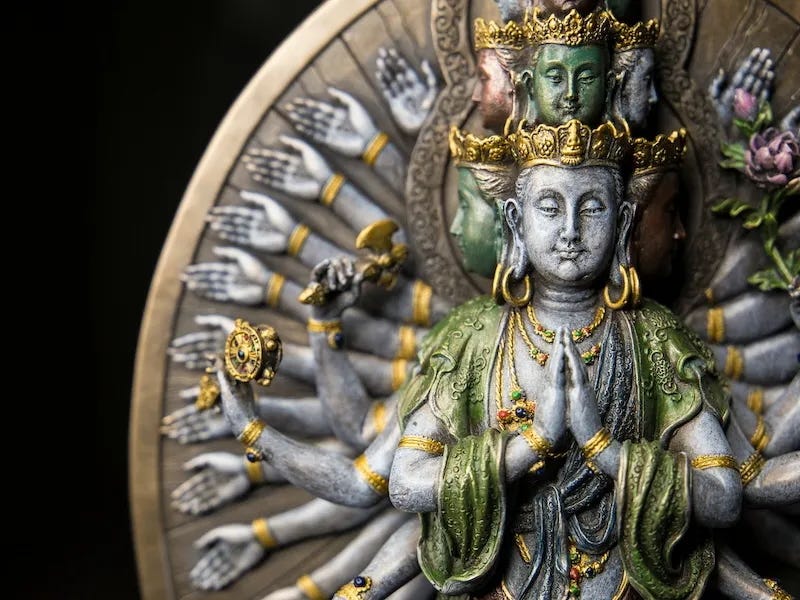
“Failure may come, but challenges can lead to greater commitment and greater skill,” Zen teacher Rafe Martin points out. “This, after all, is how the Great Bodhisattva got all those hands and eyes and mouths, too, to speak up for what’s good, and speak out about what’s wrong. It’s how we beginner bodhisattvas will do it too.”
Coming up on Tricycle:
Join Ryuko Laura Burges, for an hour of guided meditation and discussion over Zoom at 11 a.m. ET on Monday, July 6 as part of Tricycle’s Meditation Group. Sign up here.
Take Tricycle’s newest online course, Developing the Jhana Factors in Everyday Life, with Sarah Shaw. Class starts July 6, but you can join any time and go at your own pace. Sign up here.
Join Clark Strand, Tricycle’s Haiku columnist, for a haiku-writing retreat at the Garrison Institute from July 10 to July 12. Sign up here.
Become a paid subscriber to access everything on Tricycle’s website and Daily Dharma app, including 35+ years of teachings, over 500 Dharma Talks, weekly meditations, and monthly talks with leading Buddhist teachers and scholars.
Can you share a time that you “failed” and learned from your experience? What doorways opened for you?
